The global shipping industry is once again proving that volatility doesn’t always mean weakness.
Recent data shows U.S. imports are beginning to slow down after a prolonged period of elevated activity, yet many shipping and logistics firms are continuing to post strong financial gains. On the surface, those two trends may seem contradictory. But they reveal a larger story about how global trade is evolving in 2026.
For importers, exporters, and supply chain leaders, this moment is less about contraction and more about adaptation.
The Import sure Is Finally Losing Steam
After years of supply chain disruptions, tariff shifts, and aggressive inventory strategies, U.S. import activity is beginning to normalize.
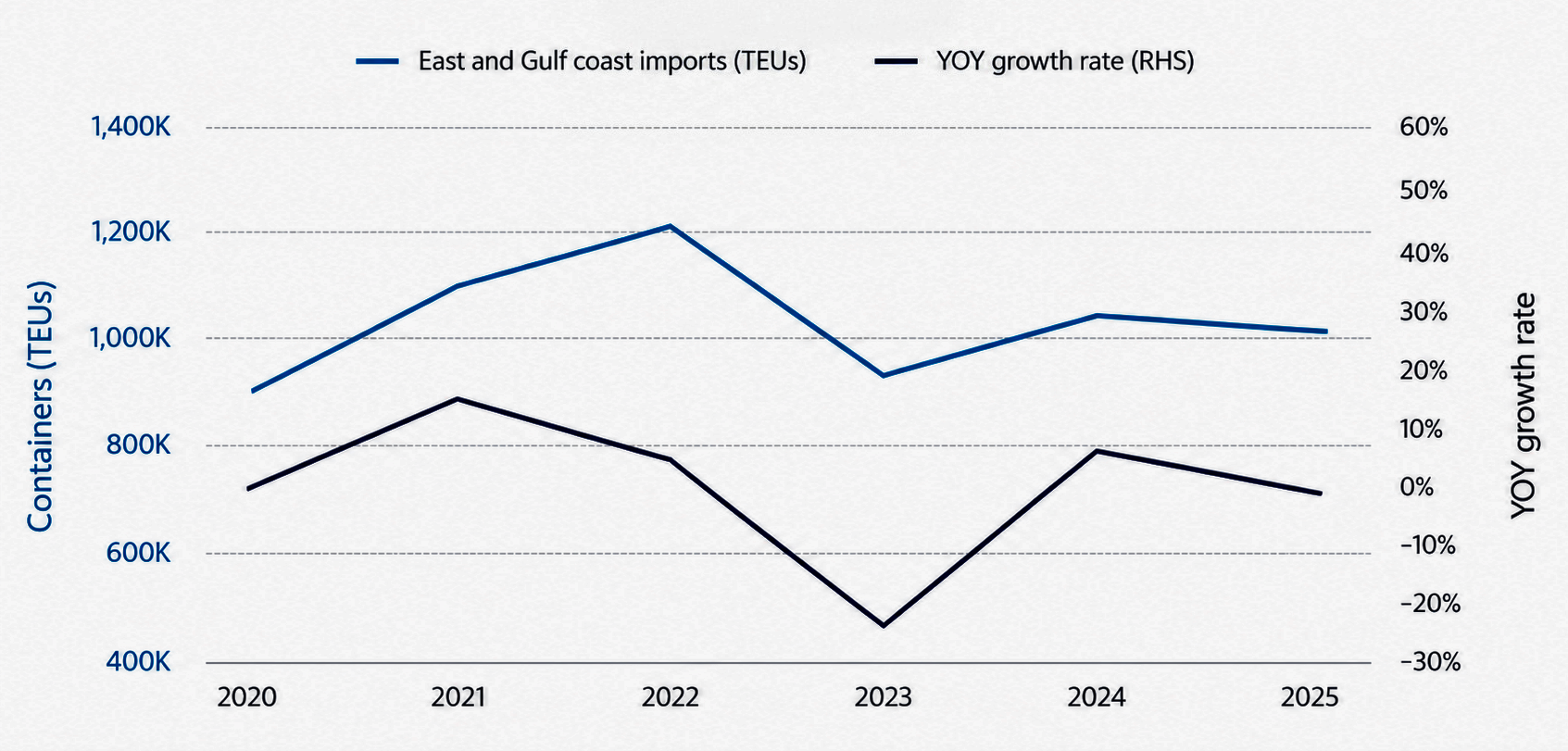
Shipping data throughout early 2026 has pointed toward softer import volumes across several major U.S. ports, particularly as companies work through excess inventory and adjust purchasing patterns. Analysts have also noted ongoing uncertainty surrounding tariffs, sourcing strategies, and global economic conditions. At the same time, containerized imports remain historically strong when compared to pre-pandemic levels. March 2026 volumes, for example, were still significantly above 2019 benchmarks despite slight year-over-year declines.
This creates an important distinction:
That market is cooling from extraordinary highs; however, this does not mean it is collapsing. That’s a major difference for businesses planning inventory, freight budgets, and sourcing strategies.
Shipping Companies Are Benefiting from a Different Kind of Market
Even as import growth moderates, many shipping and logistics firms are reporting strong performance.
Why?
Because profitability in logistics is no longer tied solely to raw cargo volume. Today’s leading firms are capitalizing on:
- Higher freight rates in select lanes
- Supply chain diversification
- Increased demand for logistics technology
- Nearshoring and regional trade shifts
- Value-added services and visibility tools
In many ways, the shipping industry has become more agile and diversified than it was before the pandemic-era disruptions.
Industry reports show that logistics providers are increasingly leaning into AI-powered forecasting, route optimization, and supply chain visibility solutions to improve margins and operational efficiency. Meanwhile, sourcing diversification away from China continues reshaping global freight patterns. Countries like Vietnam, India, Thailand, and Mexico are playing larger roles in U.S. bound trade flows.
For carriers and freight providers that adapt early, these structural shifts are creating new opportunities even in a softer import environment.
Tariffs and Trade Policy Continue to Shape the Market
Trade policy remains one of the biggest drivers of uncertainty in global shipping.
Ongoing tariff reviews, changing geopolitical dynamics, and evolving U.S.-China trade relationships are continuing to influence importer behavior. Throughout 2025 and into 2026, many importers accelerated shipment ahead of potential tariff increases, creating unusual volume spikes followed by slowdowns.
This “front-loading” behavior has created a more volatile shipping cycle than many businesses are accustomed to. Rather than relying on predictable seasonal trends, importers now need to prepare for rapid swings in capacity, pricing, and transit times driven by policy decisions as much as consumer demand.
What This Means for U.S. Businesses
For U.S. importers and exporters, the takeaway is clear:
Supply chain resilience is becoming more important than pure cost efficiency.
Businesses that continue relying on rigid sourcing models or reactive logistics planning may struggle as market conditions shift. On the other hand, companies investing in flexibility, trade visibility, and diversified supplier networks are putting themselves in a stronger long-term position. This is especially important as global trade corridors continue to evolve. Nearshoring efforts in Mexico, manufacturing expansion across Southeast Asia, and shifting port activity throughout the U.S. are all reshaping how cargo moves worldwide.
The companies that adapt fastest will likely gain the greatest competitive advantage.
The Bottom Line
The latest slowdown in U.S. imports doesn’t signal the end of strong global trade activity. Instead, it highlights a market entering its next phase. Shipping firms that embraced technology, diversified trade flows, and operational flexibility are continuing to perform well even as volumes stabilize. Meanwhile, importers are navigation a trade environment defined less by predictability and more by constant adjustment.
In today’s logistics landscape, success belongs to companies that can pivot quickly, manage risk effectively, and stay ahead of global trade shifts before they become disruptions.